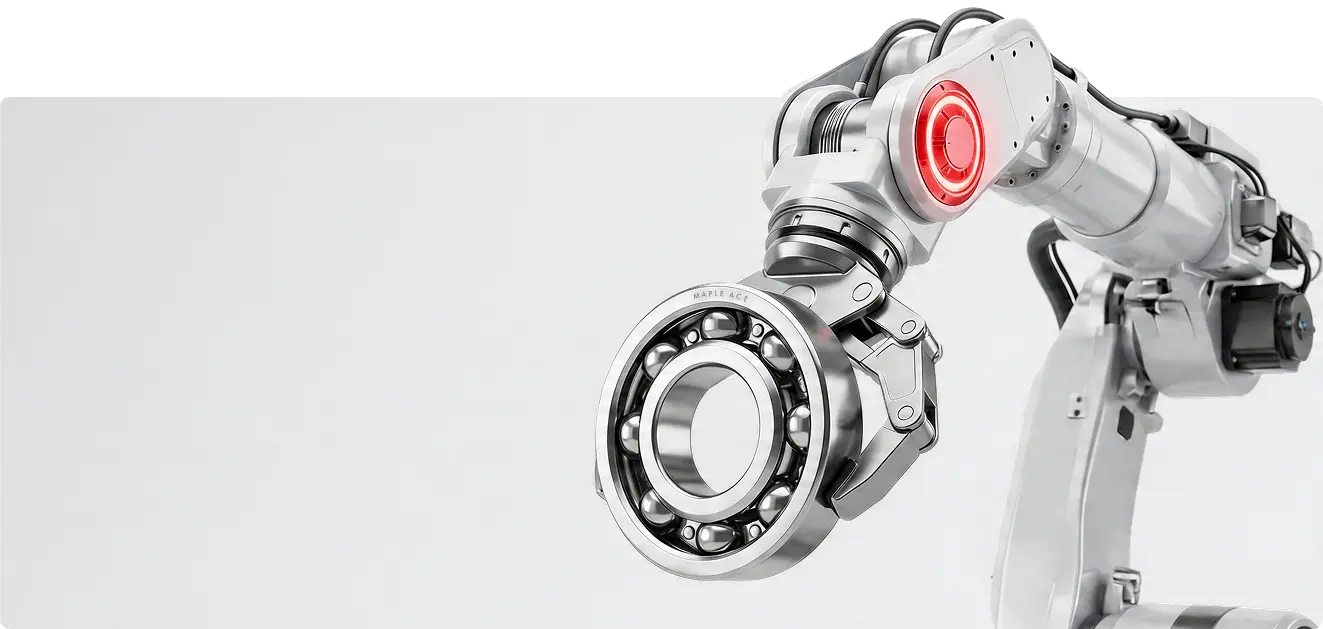
How to Choose the Right Bearing?
April 27, 2026

In today’s competitive and innovation-driven world, precision engineering plays a critical role in achieving high performance across industries. From aerospace and automotive to electronics and healthcare, the demand for accuracy, consistency, and efficiency has never been higher. Precision engineering is not just about making parts smaller or more exact—it’s about optimizing every detail to ensure maximum functionality and reliability.
What is Precision Engineering?
Precision engineering is the design and manufacturing of components with extremely tight tolerances and exact specifications. It involves advanced machinery, cutting-edge technologies, and skilled expertise to produce parts that fit and function perfectly within complex systems.
The Link Between Precision and Performance
Performance is directly tied to how accurately components are designed and manufactured. Even the smallest deviation can lead to inefficiencies, increased wear and tear, or complete system failure. Precision engineering minimizes these risks by ensuring:
Consistency: Every component performs identically, reducing variability.
Efficiency: Accurate parts reduce friction, energy loss, and operational delays.
Reliability: Systems built with precision components are less prone to breakdowns.
Applications Across Industries
Aerospace
In aerospace, precision engineering is essential for safety and performance. Aircraft components must withstand extreme conditions while maintaining flawless operation. Even microscopic errors can have serious consequences, making precision non-negotiable.
Automotive
Modern vehicles rely heavily on precision-engineered parts to improve fuel efficiency, safety, and overall performance. From engine components to braking systems, accuracy ensures smooth operation and longevity.
Medical Devices
In healthcare, precision engineering enables the creation of life-saving devices such as surgical instruments and implants. These components must meet strict standards to ensure patient safety and effectiveness.
Electronics
As devices become smaller and more powerful, precision engineering allows for the miniaturization of components without compromising performance. This is crucial for smartphones, computers, and other advanced technologies.
Technologies Driving Precision Engineering
The evolution of precision engineering is powered by advanced tools and technologies, including:
CNC Machining: Enables highly accurate and repeatable manufacturing processes.
CAD/CAM Software: Facilitates detailed design and simulation before production.
3D Printing: Allows for rapid prototyping and complex geometries.
Automation and Robotics: Improves consistency and reduces human error.
Benefits of Precision Engineering
Organizations that invest in precision engineering gain a competitive edge through:
Improved product quality
Reduced material waste
Lower maintenance costs
Enhanced customer satisfaction
The Future of Precision Engineering
As industries continue to evolve, precision engineering will become even more critical. Innovations in artificial intelligence, nanotechnology, and smart manufacturing are pushing the boundaries of what’s possible. The future will see even higher levels of accuracy, faster production times, and more sustainable practices.
Conclusion
Precision engineering is the backbone of high-performance systems. By focusing on accuracy, consistency, and innovation, it enables industries to achieve superior results and stay ahead in a rapidly changing world. Whether it’s powering advanced machinery or saving lives through medical devices, precision engineering continues to drive performance at every level.
STAY AHEAD
WITH MAPLE ACE
Subscribe to receive product updates, industry news, technical insights, and expert guidance designed to help you make informed decisions and keep your operations moving efficiently.